TLDR
The AI economy is flipping: VCs say the next $1T company will "sell work, not software," driving a wave of agent-first startups and headless SaaS. This ambition is running headfirst into the "datacenter wars," where compute scarcity is forcing frontier labs to self-build infrastructure. Developers are navigating an inverted agent architecture where "code is free, context is moat," and even non-technical PMs are shipping products using multi-model AI workflows.
The Big Picture: AI Economics Flip & Infrastructure Crunch
Sequoia's "$1T Thesis": Sell Work, Not Software
Sequoia Capital predicts the next $1T company will sell work, not software, capturing the ~6x larger services market with software margins Guillermo Flor (2 min read). This means building "AI accounting firms" instead of "AI for accountants," with smaller teams, higher margins, and no churn from bad UX because there's no UX. Agent-native startups are already treating traditional SaaS providers like Salesforce as "dumb backends," becoming the agent themselves and driving outcome-based pricing that will redefine entire vertical industries Greg Isenberg (3 min read).
Your angle with founders: "Sequoia is saying the next $1T company will sell work, not software. What 'work' is your team doing today that an agent could completely own, allowing you to capture the services dollar with software-like margins?"
The Datacenter Wars: Compute Scarcity Forces AI Labs to Self-Build

Frontier AI labs like OpenAI and Anthropic are facing a critical compute crunch, reaching limits with hyperscalers and being forced to build their own data centers Chamath Palihapitiya on All-In (91min, 0:27:40). Anthropic's astonishing growth from $1B to $30B ARR in a year, with projections hitting $80-100B, underscores the massive compute demand fueling this shift David Sacks on All-In (91min, 0:22:00), Scott Galloway on Pivot (55min, 0:25:28). This "datacenter war" is intensified by public opposition to new data center construction and a fundamental scarcity of electricity and land, which could see 30 states ban them outright Chamath Palihapitiya on All-In (91min, 0:39:20).
Your angle with founders: "The biggest AI labs are self-building data centers because hyperscalers are hitting limits. If you're planning exponential compute growth, how are you hedging against that scarcity? Are you exploring hybrid solutions, or looking for partners who can guarantee scalable capacity for your models?"
Salesforce Goes Headless 360: The API Is The UI
Salesforce has launched Headless 360, making its API the UI and exposing its entire platform for AI agents Marc Benioff (1 min read). This means AI agents can now directly access data, workflows, and tasks across Salesforce, Agentforce, and Slack without needing a browser, enabling faster builds and agentic operations. This move signals a broader shift where every enterprise SaaS company is expected to go headless within 18 months, enabling new "agent-native" startups to treat them as programmable backends Greg Isenberg (3 min read). Notion is making the same bet — building for agents as first-class users, with the majority of their traffic eventually coming from agents Notion team on Latent Space (86min, 0:31:40). They're investing in open-source models to fill gaps in the intelligence-price-latency triangle as agents drive most of their search traffic.
Your angle with founders: "Salesforce went headless, Notion is building for agent traffic first. The CLI is becoming the new UI. Google Cloud helps customers build for this shift — Apigee provides the API management layer that lets you expose your platform to agents securely and at scale, while Vertex AI powers the agents themselves. Are you designing your product surface for agents, not just humans?"
Builder's Corner: The Shifting AI Development Paradigm
"Code is Free, Context is Moat": Harness Design Inverts Architecture
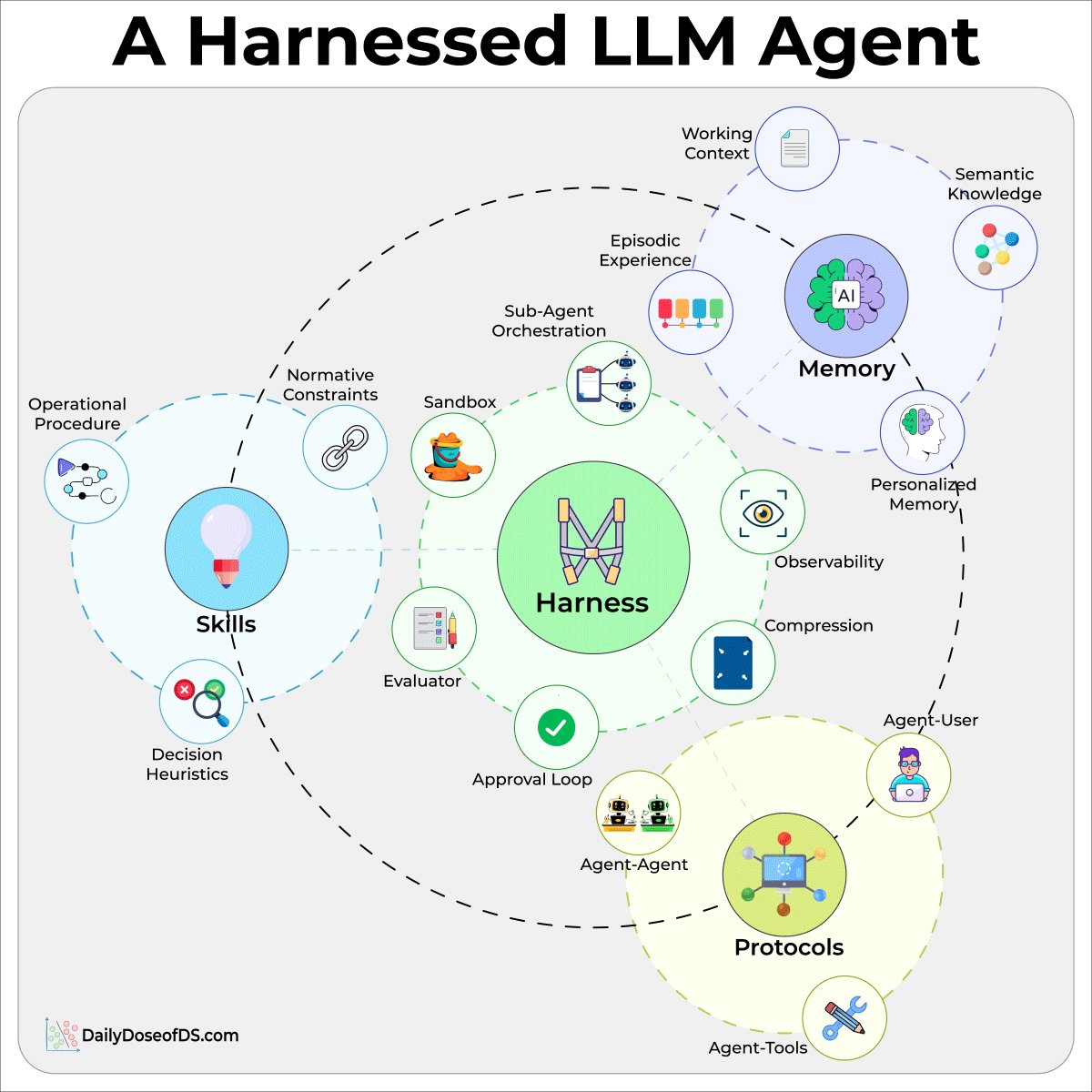
A deep dive into "harnessed LLM agents" reveals an inverted architecture: the model is deliberately thin, and intelligence is pushed outward to a harness that composes memory, skills, and protocols at runtime Akshay Pachaar (3 min read). An OpenAI staff engineer reinforces this, arguing that code is free, but context, guardrails, and feedback loops are the true moat for AI coding agents Rohit (1 min read). This means focusing on the surrounding system — sandboxing, observability, evaluation, and approval loops — rather than just the model itself.
Why founders care: If code is free, your competitive advantage shifts from writing lines of code to designing the surrounding system that gives your AI context and guardrails. Are you investing in building that harness and the feedback loops, or just chaining LLM calls? The game has changed from writing code to engineering the environment around the code-generating AI.
Throwback Still Hitting: Karpathy on Software 3.0 & LLMs as OS
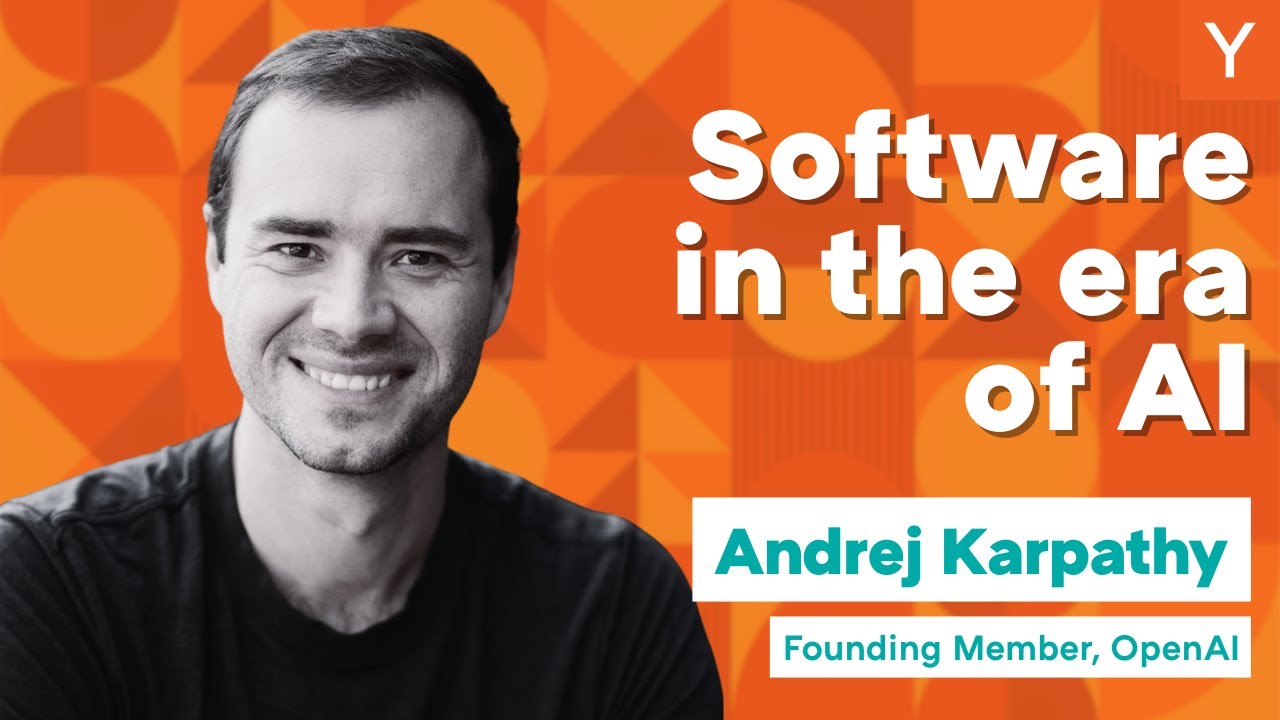
This talk from last summer keeps resurfacing in founder conversations because the framing has only gotten more relevant. Andrej Karpathy introduces Software 3.0, where LLMs are operating systems — the LLM is the CPU, the context window is RAM, and it orchestrates memory, compute, and tools through natural language prompts Andrej Karpathy on Y Combinator (40min). He argues we're in the "1960s of computing" for AI: LLMs are too expensive for personal computing and remain centralized in the cloud with time-sharing. The personal computing revolution for AI hasn't happened yet — but with inference costs dropping 3x/year (see Amin Vahdat above), it's coming fast.
Why founders care: If you talked to founders last summer, they were debating this framing. Now they're living it — building prompts and agents as Software 3.0 programmers. The question has shifted from "is this real?" to "how do I scale it affordably?" Your cloud infrastructure choices for inference are the make-or-break decision.
Founder Watch
Patrick Collison Unleashes Coding Agents on His Genome
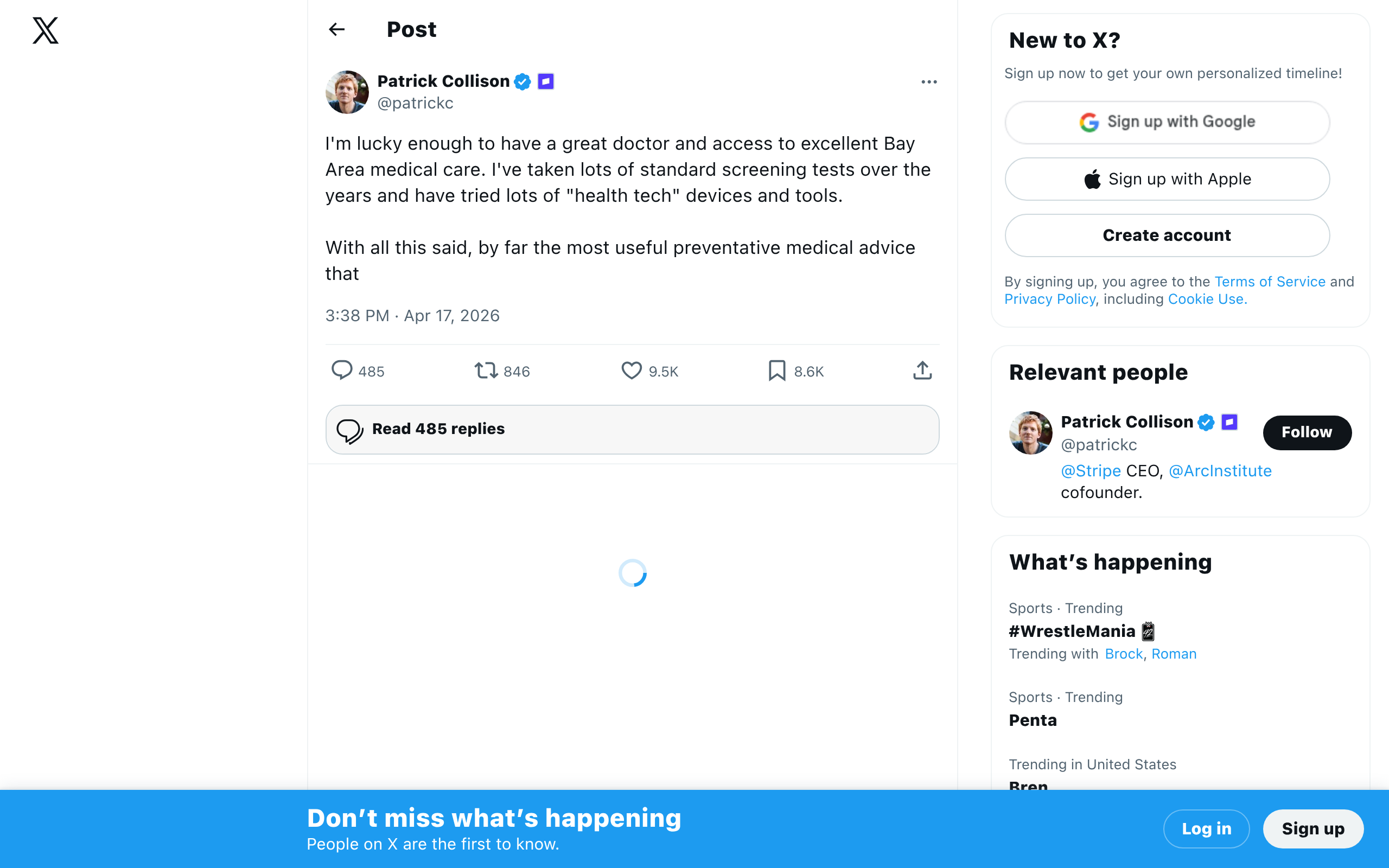
Stripe CEO Patrick Collison revealed that unleashing coding agents on his genome provided the most useful preventative medical advice he's ever received Patrick Collison (3 min read). For less than $100 in analysis, he discovered a 30x higher melanoma predisposition and identified specific supplements. This points to a future of personalized medicine driven by AI, far exceeding current human capabilities. Echoing this, one founder sequenced their genome at home, tracing multigenerational autoimmune conditions with open-source DNA models, emphasizing privacy-first approaches Seth Howes (2 min read).
Conversation starter: "Patrick Collison says coding agents on his genome gave him better preventative medical advice than any doctor. Are you thinking about how AI can unlock personalized insights from highly complex data sets, even if those data sets are 'human'?"
Quick Hits
- LangChain Co-founder: Memory as a Moat (2 min read) — LangChain's co-founder states that agent memory, built with four markdown files and a cron job, can be a real moat, enabling persistent agent intelligence.
- Claude Code Routines: Triggers Are the Product (3 min read) — Claude Code Routines let you tell Claude what to do with specific triggers, running 24/7 on Anthropic's servers, highlighting that "the model is the commodity, the trigger is the product" for agent-native startups.
- X API Price Changes: Owned Reads Drop to $0.001/Request (2 min read) — X API is dropping "Owned Reads" to $0.001/request, making it significantly cheaper to access your own data for AI applications, while other write/URL-based calls increase.
Try This Week
Andrej Karpathy and Boris Cherny (creator of Claude Code) both advocate for minimalist, goal-driven prompting. This week, try creating a CLAUDE.md (or GEMINI.md) file for your next coding task with just four principles: Think before coding, Simplicity first, Surgical changes, and Goal-driven execution Tech with Mak (3 min read). See if less scaffolding leads to better, more focused AI outputs.
Our Play
GCP's AI Infrastructure: Doubling Down on Inference & Efficiency
The "datacenter wars" and compute scarcity are driving critical decisions for AI labs. Google Cloud's Amin Vahdat on This Week in Startups (28min) reveals Google's relentless focus on inference efficiency, making things "twice as fast in 3 months" and compounding to over 10x in a year. This rapidly dropping cost of intelligence (3x/year) means founders are now limited by imagination, not compute, shifting the bottleneck. For companies needing reliable, scalable inference without building their own data centers, our continuous efficiency gains across TPUs and Gemini models on Vertex AI provide the backbone to scale without hitting capacity walls.
Connect to this week: As compute scarcity forces AI labs to self-build, Google Cloud is doubling down on inference efficiency and cost reduction, providing a scalable, imagination-unbottling platform for your AI innovations.
Beyond LLMs: GCP's Platform for Verifiable & Custom AI
The emergence of "inverted" agent architectures and the need for deterministic AI signals a move beyond generic LLMs for critical tasks. The Logical Intelligence team notes a market gap for deterministic, verifiable AI that LLMs can't fill due to high compute for "guessing games" and lack of transparency Eve on AI & I (54min, 0:02:23). Meanwhile, Neo4j, which internally fine-tunes models for graph queries, defaults to Gemini for its text-to-Cypher translations, highlighting the practical application of our models in specialized domains Emil Eifrem on Latent Space (49min, 0:18:41). Google Cloud's Vertex AI provides the flexibility to build and deploy custom models, including specialized architectures or fine-tuned Gemini models, enabling enterprises to develop private, custom AI solutions with the verifiability and data governance they need.
Connect to this week: As the need for custom, verifiable AI grows and "code is free, context is moat," Google Cloud empowers founders to build beyond generic LLMs, leveraging Vertex AI and Gemini for highly specialized, transparent, and custom AI applications.