TLDR
- "Burn tokens, not headcount" is now a YC thesis. Y Combinator is telling portfolio companies the new unit of value is a recursive self-improving loop, not headcount. Demo Day cohorts hit it with 5x more revenue per employee than 18 months ago.
- Token-budget-per-person is the new enterprise line item. Nat Friedman and Daniel Gross flag that individual ICs are now racking up significant AI spend across APIs — and no finance team has the right framework to attribute it. The next AI line item belongs to the CFO, not the CTO.
- "Software is not a moat" — now applied to AI. Snapchat's Evan Spiegel says the 15-year-old lesson is being rediscovered: distribution, ecosystem, and hardware are the real moats. Founders racing to ship Claude wrappers should hear this.
/goalships autonomous Claude Code loops. A built-in command runs Claude turn-after-turn until a verifiable finish line is met. Boss-worker pattern under the hood. The "set and walk away" agent moment, in production.
The Big Picture
"Burn Tokens, Not Headcount" — YC's Self-Improving Company Thesis
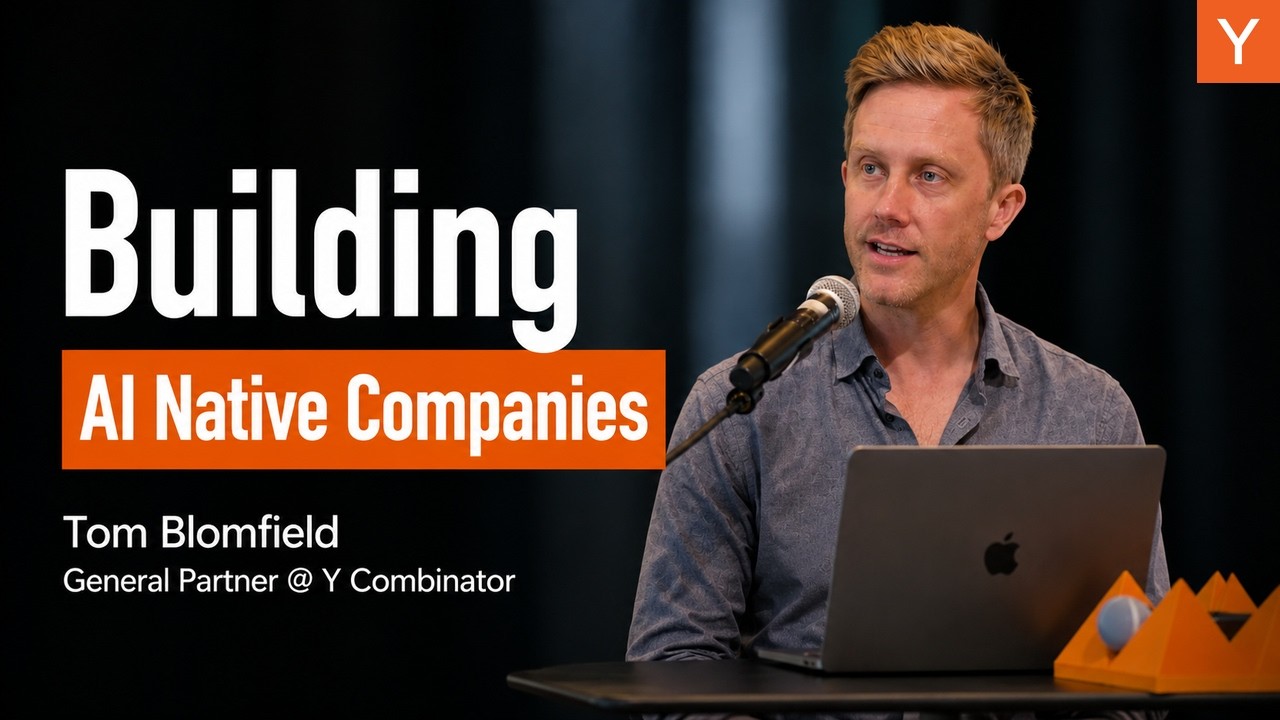
The hierarchical org chart — humans as information conduits between layers — is now obsolete, argues Y Combinator. The new unit of value is a recursive self-improving loop: sensor (emails, tickets, telemetry) → policy (rules, permissions) → tools (deterministic APIs and skills) → quality gate (evals, human review on risky calls) → learning that updates the skills and code overnight. Live example: a YC company's monitoring agent watches every internal query, identifies failures, writes a PR to fix the underlying tool, ships it — next morning the same query succeeds. The aha is not making humans 20–30% more productive; it's removing them from the loop on routine work. YC reports Demo Day cohorts at 5x revenue per employee vs. 18 months ago YC Root Access (13 min watch).
Your angle with founders:
- Loop, not feature: "Which of your workflows is a true closed loop today — sensor, action, eval, learning — vs. a human pasting outputs between tools?"
- Where humans actually belong: "Where is human review adding value, and where is it just slowing the loop without catching anything?"
Where the GCP opportunity is: Agentic Data Cloud + GEAP Agent Engine Runtime + Memory Bank are the substrate — persistent memory, IAM-isolated multi-tenancy, async fan-out. The conversation shifts from "which model" to "where does loop state live, and how does it learn overnight."
Tokenmaxxing: The Per-Person AI Budget Becomes the Next CFO Line Item
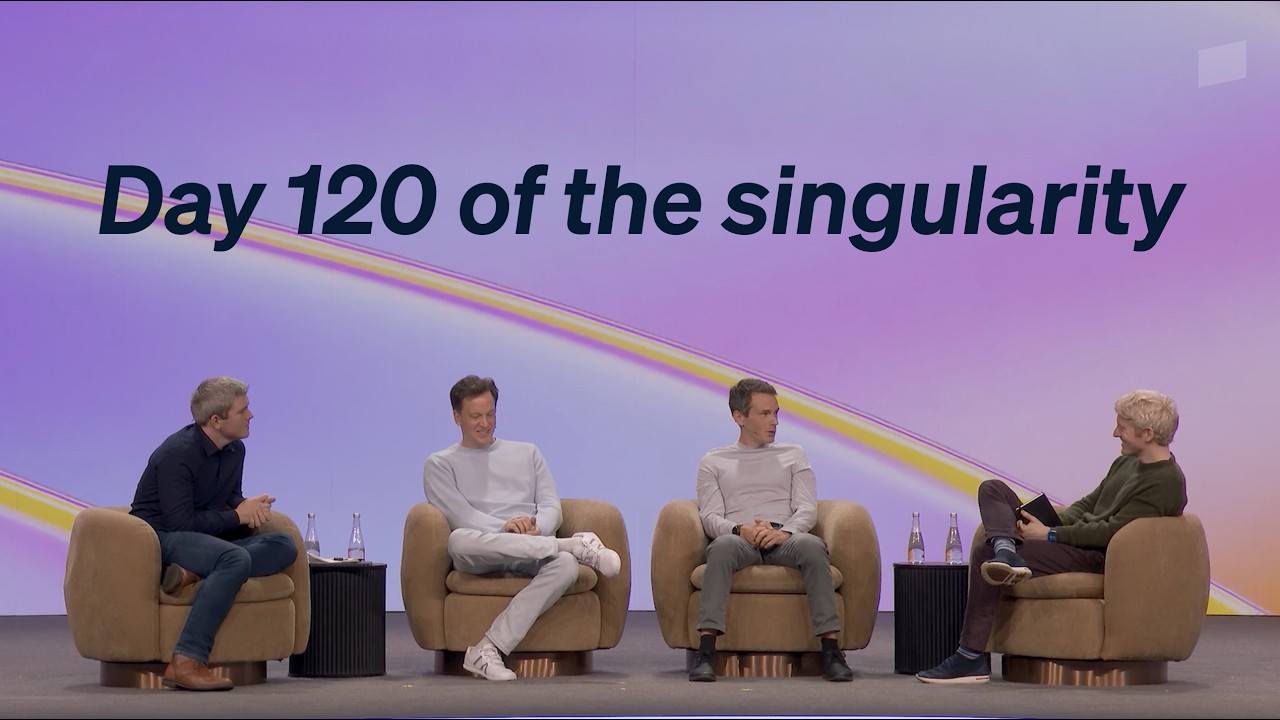
Individual ICs can now rack up serious charges across a dozen AI APIs — and finance has no framework to attribute it. Daniel Gross on Cheeky Pint: "What is the right way to think about attributing budget to individual people?" Nat Friedman flagged that many of those tokens are economically unnecessary — a smaller model would do the same job. They also named the bottleneck: verifying AI-driven G&A work has become the slowest step in the loop. Humans are the gating function on agent throughput Nat Friedman & Daniel Gross on Cheeky Pint (56 min, 33:00).
The enterprise AI line item is no longer "how much does the company spend on Anthropic" — it's per-seat allowance, top-spender visibility, model-tier routing, and guardrails before exploration becomes a budget event.
Your angle with founders:
- Per-seat policy: "Do you have a per-employee token budget today, or is everyone on a shared key? When you hit a six-figure month, how will you know which team drove it?"
- Spend-as-signal: "What does your top token-spender's workflow look like? That person is your real R&D — and your biggest unmanaged cost center."
Where the GCP opportunity is: GEAP's per-project IAM, per-team billing, and quota controls give finance the attribution Friedman wants. Multi-model routing (Gemini, Claude, open models on one invoice) lets customers reserve Opus for high-value loops and route the rest to Gemini Flash. Lead with billing and identity, not GPU pricing.
"Software Is Not a Moat" — Spiegel's 15-Year-Old Lesson Hits AI
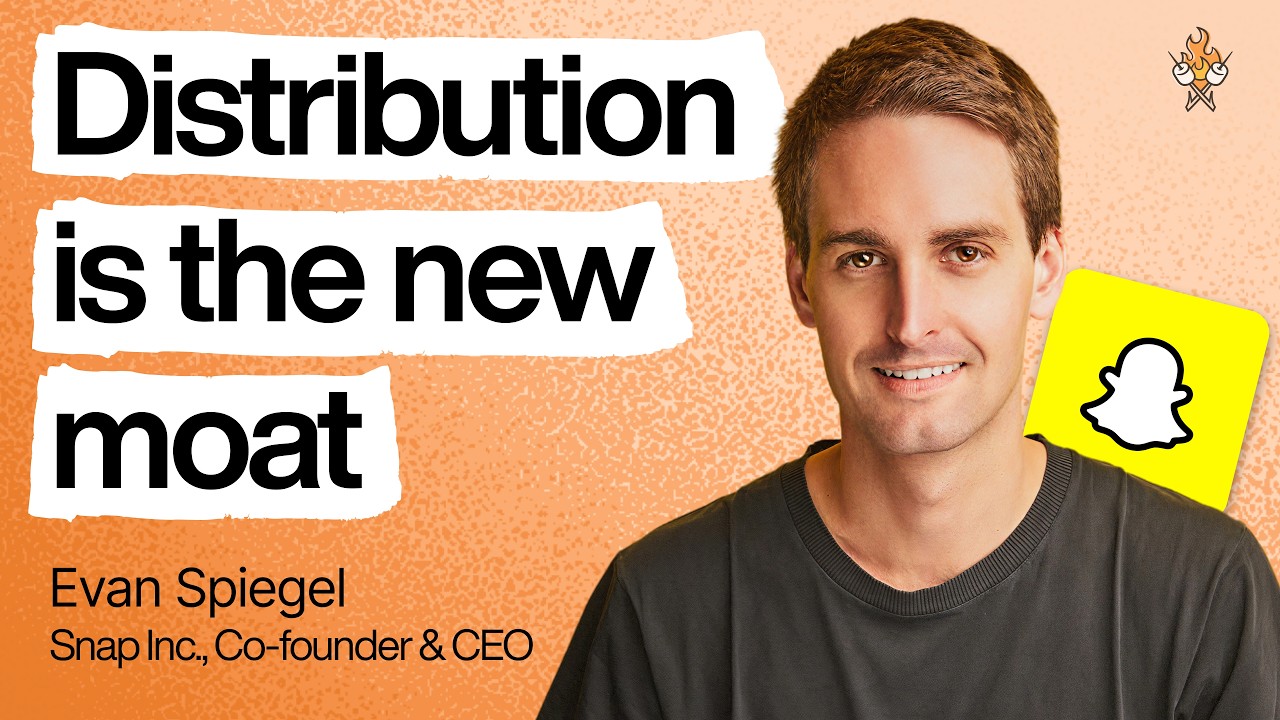
Evan Spiegel surfaced the most-overlooked founder warning of the week: "15 years ago we learned software is not a moat — which everyone is discovering today with AI." Hardened by a decade of watching Meta clone every Snap feature within weeks: features are trivially copyable; durable moats live in distribution, ecosystems, and hardware. Every prompt, agent loop, or RAG pipeline can be replicated in days. The winners own the buyer relationship, the platform, or the device Evan Spiegel on Lenny's Podcast (71 min, 03:00, 20:53).
Your angle with founders:
- Where's the actual moat? "If a competitor could replicate your AI feature in a weekend with Claude, what's the asset they can't replicate — your data, distribution, integrations, or customer trust?"
- Distribution before features: "Where are you spending more time — building the next feature, or building the channel that gets it in front of customers? Spiegel says most consumer founders get this ratio backwards."
Where the GCP opportunity is: Ecosystem and data integrations that are hard to rip out — Agentic Data Cloud, BigQuery as system of record, marketplace + partner network. Switching costs no Claude wrapper can replicate. The conversation moves from "which model" to "which data and distribution surface are you compounding on."
Builder's Corner
Claude Code's New /goal Command for Autonomous Tasks
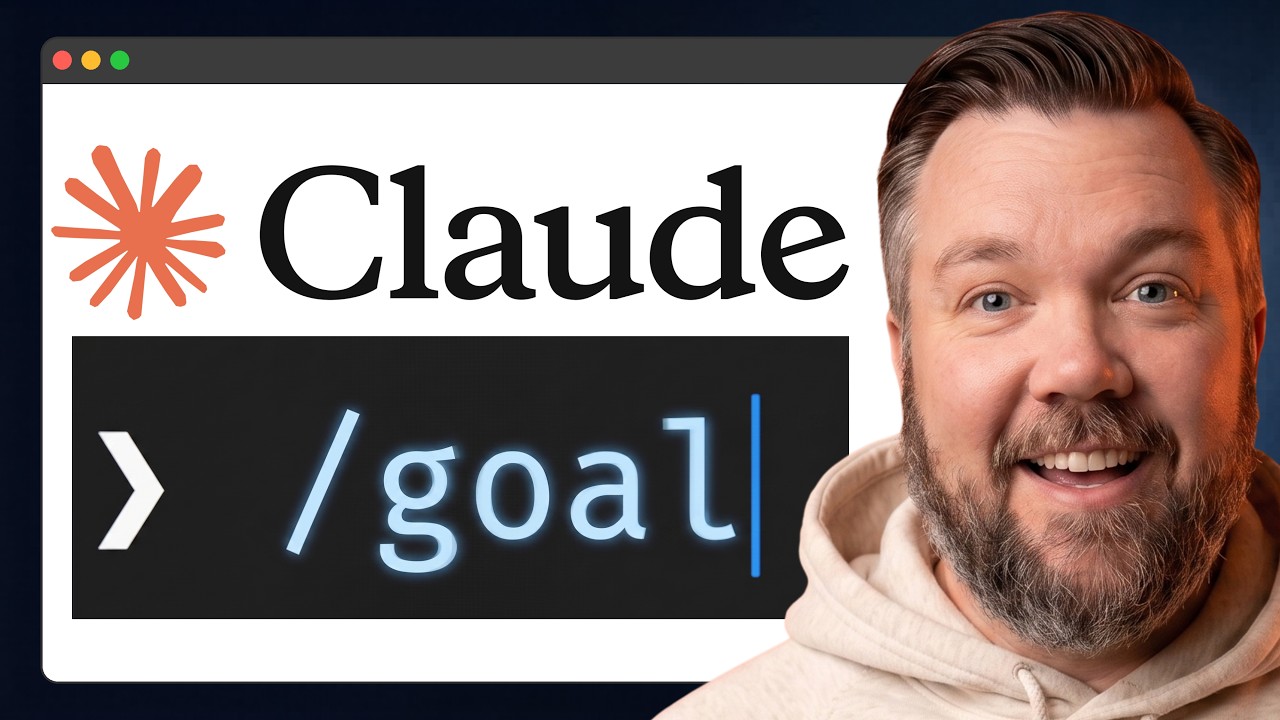
Claude Code's new /goal command runs the agent autonomously until a verifiable finish line is met — no constant human prompting. Two agents under the hood: a worker (Opus/Sonnet) and a "boss" reviewer that checks the goal after every step. Example: processing a year of bank-statement PDFs into a categorized spreadsheet, which previously required babysitting Tristen O'Brien on YouTube (8 min watch). Pair with --dangerously-skip-permissions or pre-approved tools for truly hands-off execution.
Why founders care: Multi-step, verifiable workflows (data extraction, summarization, categorization) become set-and-forget. Agent autonomy crosses a new threshold.
Founder Watch
Anthropic Cowork for Sales — The Skills-in-a-Session Demo
Brittany, a growth AE at Anthropic, demoed Cowork by building an "account strategy" skill live: pulls call recordings, Salesforce data, warehouse usage, Slack, email, and web in parallel, then synthesizes into a pre-meeting brief. A second skill, "call transcript processor," runs post-meeting to produce personal action items, an internal Slack update, and a customer follow-up email — each gated for human approval before sending Anthropic Cowork demo (3 min watch). The 30-minute post-meeting wrap collapses to ~2 minutes and is more thorough than working from memory.
Conversation starter: "If your AE could spin up a custom prep-and-follow-up skill in 10 minutes — and approve every outbound message before send — what's the actual blocker: data connections, security review, or org muscle?"
Dust Raises Series B — Scaling "Multiplayer AI"
Dust (Abstract, Sequoia) raised its Series B pitching the multiplayer AI layer: solo agent use doesn't compound across a team because the agent lacks shared company context. Their platform is a shared workspace for humans and agents to collaborate on context, artifacts, and goals. Named customers include 1Password, Datadog, and Vanta — continued investor appetite for enterprise multi-agent orchestration Dust YouTube (1 min watch).
Conversation starter: "Is your team's AI use hitting a wall because agents lack shared context — and how are you thinking about that 'multiplayer' collaboration layer?"
Quick Hits
- Kimi K2.5 + Agent Swarm released as open architecture (May 24) — Moonshot's open-weight system orchestrates 100+ parallel agents with 1,500 concurrent tool calls. Tasks that take Claude 4.5 / GPT-5.2 an hour, Kimi finishes in ~15 min at 4–5x lower cost. The China-frontier swarm pattern is now reproducible on hyperscaler GPUs.
- Sam Altman: "revenge of the idea guys" (56 min watch) — Non-technical founders who deeply understand users are now fundable because they can build. The next unlock after coding: delegating computer-clicking drudgery entirely.
- Dan Shipper: "I would buy SaaS stocks right now" (May 24) — Counter to the SaaS-is-dead narrative and a useful tension with Spiegel's "software is not a moat." Implicit thesis: AI-augmented SaaS expands the market, doesn't collapse it.
- FDE arbitrage: AI is bottlenecked by translation, not intelligence (23 min watch) — 95% of enterprise AI pilots fail in production — not because models are weak, but because of data silos, governance, and integration. FDE postings surged Jan–Sep 2025 while general SWE postings flatlined.
Try This Week
Pull the per-team AI bill from your top three accounts and walk in with one question: "Who's your top token-spender, and what are they actually doing with those tokens?" That single ask surfaces the AI-native workflow the customer cares about, the team that will defend renewal, and the policy gap finance hasn't filled. Fastest path from usage line item to a strategic conversation about GEAP's per-project billing, model routing, and per-seat quotas.
Our Play
Agentic Data Cloud: The Substrate for Connective-Tissue AI
Google Cloud's Agentic Data Cloud makes a customer's existing tools (CRM, support, billing, comms) legible to agents without ripping them out. A Knowledge Catalog structures diverse data, a Data Agent Kit lets agents access and synthesize across silos, and zero-ETL via Iceberg REST and Cross-Cloud Interconnect avoids a two-quarter migration. Security and IAM hold up to a deal-desk review.
Connect to this week: Dust's "multiplayer AI" thesis and the Anthropic Cowork demo both depend on a shared data substrate the agent can read across — without rebuilding the data layer. Agentic Data Cloud is the GCP version of that surface.
Agent Engine Runtime + Memory Bank for Self-Improving Loops
YC's loop (sensor → policy → tool → eval → learning) needs four things most cloud stacks don't give you in one place: a long-lived reasoning loop that survives restarts, cross-session memory per user, kernel-isolated sandboxes for model-generated code, and async fan-out. On Gemini Enterprise Agent Platform (FKA Vertex AI) those are Agent Engine Runtime (write once with open-source ADK), Memory Bank (IAM-layer multi-tenant isolation), GKE Agent Sandbox (kernel-isolated execution), and Cloud Run Worker Pools (async fan-out). One framework, four managed surfaces, all inside the customer's VPC.
Connect to this week: "Burn tokens not headcount" only works if loop state actually persists. For founders DIY-ing on Lambda + DynamoDB + ECS, lead with simplification. For multi-tenant SaaS, lead with Memory Bank's IAM-level isolation — the difference between "we filter at the application layer" and "the platform enforces it."