TLDR
- Alpha transfer is the new tax. Palantir CEO Alex Karp sparked a firestorm, accusing frontier labs of "stealing the alpha" of enterprises through token pricing.
- Sovereignty > Smartest Model. Enterprises are demanding control over their compute, models, and data, treating AI services as replaceable components rather than long-term partners.
- Power is the next GPU. Valor Atomics is building nuclear reactors to deliver abundant, cheap power for AI compute, with Taiwan's energy crisis highlighting the looming bottleneck.
- Open-weights close the gap. Chinese models like GLM 5.2 are now genuinely competitive, with a 65x cost advantage over frontier models for many enterprise tasks.
- Harness optimization is the new fine-tuning. Builders are achieving frontier-level performance at a fraction of the cost by evolving the scaffolding around cheaper models.
The Big Picture: The New Sovereignty Landscape
The Alpha Transfer: Unbundling Frontier AI's Ownership Tax
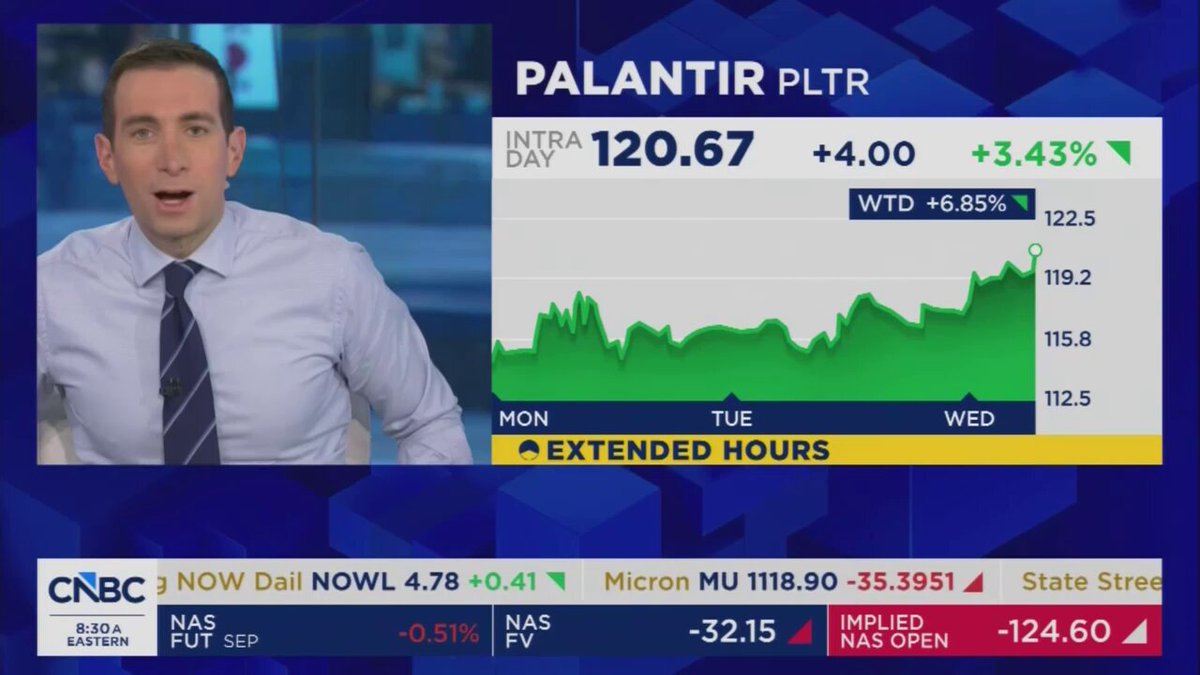
Palantir CEO Alex Karp ignited a debate this week, publicly accusing frontier AI labs like OpenAI and Anthropic of "stealing the weights and alpha" of enterprises. Karp argued on CNBC that companies are "livid" about "paying for tokens that create no value" and that sophisticated customers want to "own the means of production" for their AI stack Alex Karp on CNBC (2 min watch). This "alpha transfer," as investors like David Sacks framed it, happens when enterprises run proprietary data and workflows through a frontier model, inadvertently teaching that model "HOW to replace them" or revealing lucrative "roadmap capture" opportunities to the vendor David Sacks on X (2 min read). The infamous example: Anthropic's Claude Design launching three days after their CPO left Figma's board, blindsiding a former partner Jason Calacanis on All-In (5 min watch). Deutsche Bank calculated a ~65x cost gap between frontier and open-source models, with Chamath Palihapitiya demonstrating 16.4x savings using an open-source model with an orchestration layer Chamath on All-In (5 min watch). The market is moving towards "sovereignty leverage"—local deployment, version lock, cost control, fine-tuning, and bargaining power against closed labs The Prophet on X (2 min read). Even European governments are pushing back, with France, Germany, and Spain ditching Palantir for local vendors, stating they "cannot accept new strategic dependencies in the digital sphere" Arnaud Bertrand on X (3 min read).
Your angle with founders:
- Where it hurts: "What's the 'alpha' in your business—the proprietary knowledge, the unique workflows—that you absolutely cannot afford to transfer to a third-party model vendor?"
- How they're hedging: "Are you architecting your AI stack to own the context layer and keep models as swappable components, or are you betting on a single frontier model for the long haul?"
- Where the GCP opportunity is: Agentic Data Cloud, with its Knowledge Catalog and Data Agent Kit, lets founders own and govern their context layer. Gemini Enterprise Agent Platform (FKA Vertex AI) provides a neutral, multi-model substrate (including open-source options) allowing founders to swap models and integrate agents without ceding their strategic company memory.
The Next Energy Bottleneck: Powering AI's Unbounded Demand
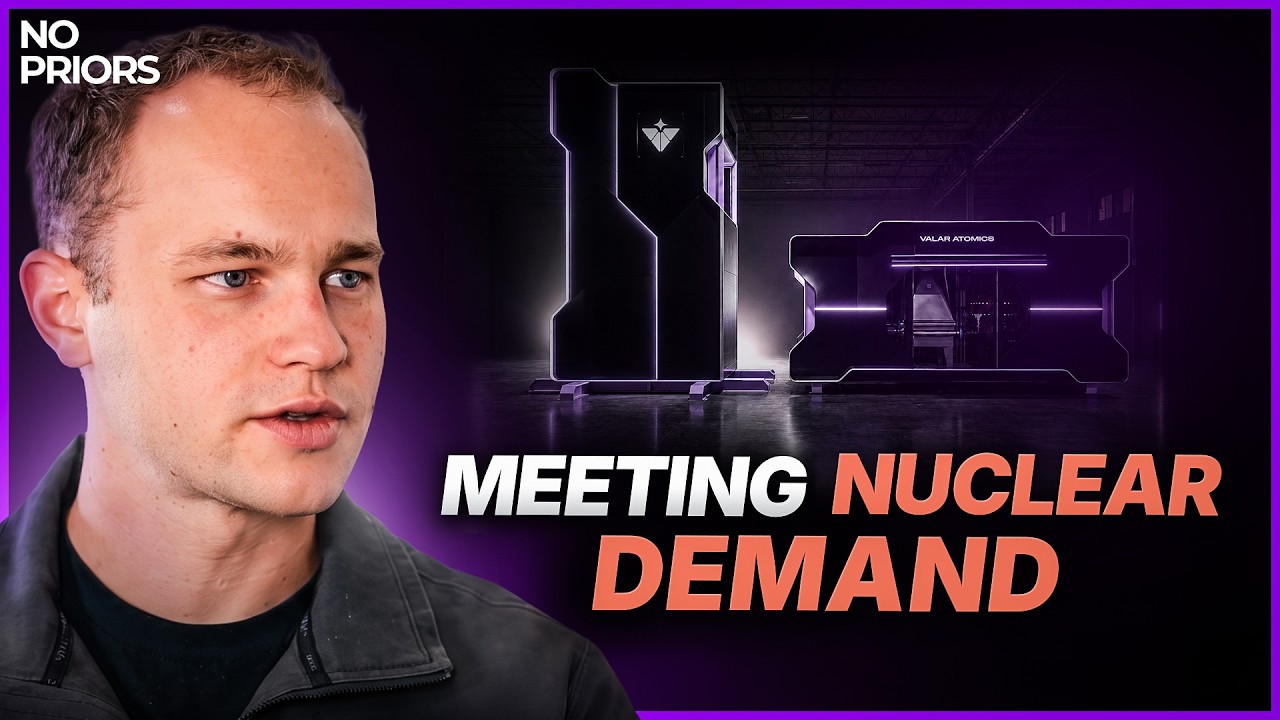
The relentless demand for AI compute is exposing a new critical bottleneck: cheap, abundant power. Isaiah Taylor, CEO of Valor Atomics, argues that humanity is now "manufacturing intelligence" and that "electricity becomes the key factor," creating an "infinite market" for energy if costs can be significantly reduced Isaiah Taylor on No Priors (62min, 0:30:10). Valor Atomics is tackling this by building "planetary scale" nuclear reactors, already demonstrating their W250 reactor directly powering Nvidia Blackwell AI chips Isaiah Taylor on No Priors (62min, 0:39:56). This comes as even global tech giants like Google and Amazon are finding themselves constrained by electricity, unable to build "infinite data centers" in critical regions like Taiwan due to severe energy shortages and political dysfunction Akab Zakaria on ChinaTalk (75min, 1:00:23). While physical infrastructure (construction, cooling, copper, skilled labor) remains a bottleneck, the looming power crisis signals a fundamental shift in AI's foundational resource Harry Stebbings on X (2 min watch).
Context, not an angle: we don't sell power, and neither does a frontier lab — there's no founder "play" here. But energy is becoming the real gate on where and how fast compute gets built, which is the backdrop to every capacity conversation this year.
The Enterprise Reckoning: Why 'Frontier Only' AI is Fading
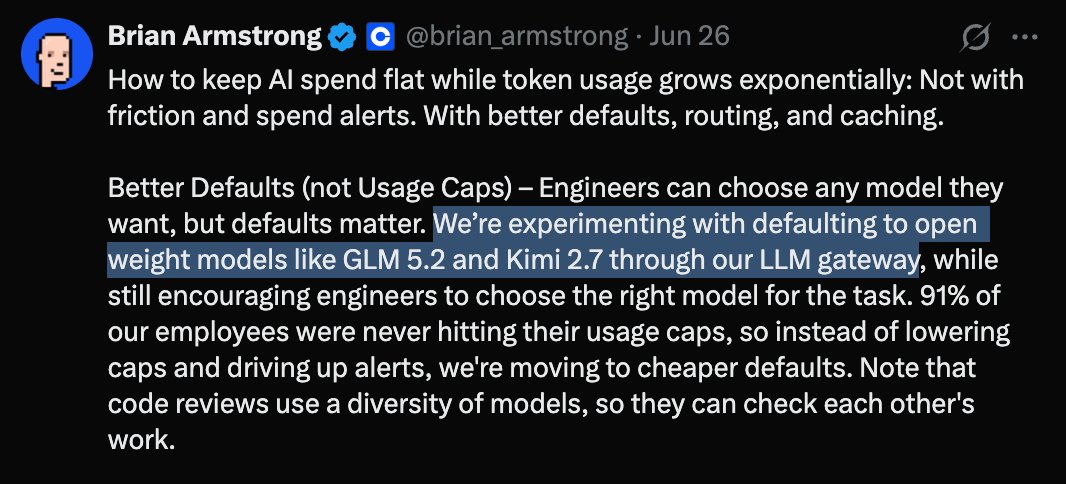
The days of companies relying solely on expensive frontier models "are coming to an end," according to Peter Yang Peter Yang on X (2 min read). The consensus is clear: frontier API prices are collapsing, with Nikesh Arora predicting "tokens at one-tenth" of today's prices long-term, and others predicting tokens will be "effectively free" by Christmas 2026 for most users Nikesh Arora on X (1 min read), Andrew Amann on X (2 min read). Companies are now pursuing a "portfolio of models," using frontier models for high-stakes, differentiated tasks, and cheaper, increasingly capable open-source alternatives for everything else. Chinese open-source models like GLM 5.2 and Qwen are gaining significant traction, with companies like Coinbase, Airbnb, and Microsoft actively using or testing them Yuhasbeentaken on X (1 min read). The temporary export controls on Claude Fable 5 further highlighted the risk of "single model reliance," creating "consternation and concern" among European customers Nikesh Arora on X (2 min read). This shift is driven by a realization that the enduring enterprise advantage is the "context a system holds about you, not the model" Nikesh Arora on X (1 min read). As moats based on models alone disappear, AI is being "unbundled," with value moving to private data, real workflows, and the partners who deeply understand customer systems Michael Mignano on X (2 min read).
Your angle with founders:
- Where it hurts: "How are you balancing the perceived 'best' performance of frontier models with the rapidly improving capabilities and significantly lower costs of open-source alternatives?"
- How they're hedging: "Given the risks of single-model reliance (e.g., export controls, vertical integration), what's your strategy for maintaining optionality across models without re-plumbing your entire AI stack?"
- Where the GCP opportunity is: Gemini Enterprise Agent Platform (GEAP) offers both Gemini and Anthropic Claude models, plus a growing Model Garden of optimized open-source options (like Gemma), enabling true model optionality on a single platform. Utilize GEAP's fine-tuning and retrieval-augmented generation (RAG) capabilities to build custom intelligence using your own data, ensuring your "memory is the moat."
Builder's Corner: Engineering Intelligence, Not Just Models
Harness Optimization: The New Frontier for Cost-Effective AI Performance
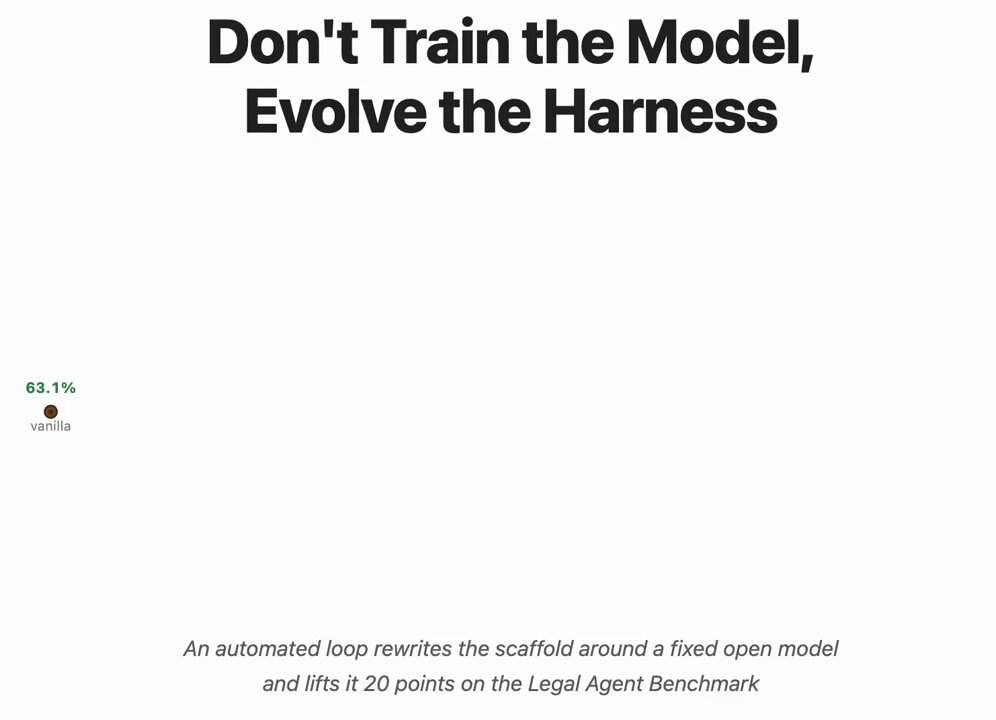
As token costs become critical, builders are shifting focus from training bigger models to "evolving the harness"—optimizing the scaffolding around cheaper models. Joel Niklaus demonstrated cutting legal task costs by 7x, achieving Sonnet 4.6 performance with DeepSeek V4 Pro by automatically optimizing the model's harness (pushing it from 0% to 5% all-pass rate on a legal benchmark) Joel Niklaus on X (1 min read). This strategy is driven by the fact that many frontier models "don't surpass 0% all-pass rate" on complex tasks, but thoughtful prompt-optimization frameworks like GEPA can get you far with open-source models Niels Rogge on X (1 min read). Thinking Machines, in partnership with Bridgewater, fine-tuned a model on Bridgewater's private expert judgment, beating frontier models with 29.8% fewer errors and 13.8x lower inference cost for financial information triage tasks Mira Murati on X (1 min read). Sam Hogan shared a concrete migration recipe: use an Inference Gateway to mirror live traffic, auto-generate evals from real-world data, and only switch to a cheaper model (like GLM 5.2) once evals are healthy Sam Hogan on X (1 min read). This shift highlights that "mid-session routing" and "sub-agents" are rapidly becoming key to cost-effective, real-world AI deployment Ben Hylak on X (1 min read).
Why founders care: Get frontier-grade AI performance at a fraction of the cost, maintain control over their model stack, and de-risk model migrations with real-world evaluations before committing.
Founder Watch
Databricks' Omnigents: The New Agent Cloud for Enterprise
Matei Zaharia and Reynold Xin of Databricks are making a big bet on the "Agent Cloud" with their new Omnigents platform, aiming to provide a collaborative, secure, and portable environment for AI agents. Their core insight: "Traditional software will be rewritten with this new paradigm which is just get the data to be there and then let's slap some AGI on top. Magic will come out." They emphasize unifying the storage layer—not a single compute engine—as the right approach for enterprise HTAP (Hybrid Transactional/Analytical Processing), with security and governance for agents being critical concerns, often outweighing token cost optimization Matei Zaharia on Latent Space (71min, 0:00:20, 0:23:40). Databricks, which orchestrates 50-60 million virtual machines daily across major clouds, aims to provide enterprises with an open foundation, avoiding the vendor lock-in seen with proprietary data formats Reynold Xin on Latent Space (71min, 0:52:00).
Quick Hits
- GLM 5.2 running locally on a single Mac (1 min watch) — A concrete demonstration of frontier-class open-weight models (GLM 5.2 4-bit) running on consumer hardware (M3 Ultra) at ~16 tokens/second.
- Nvidia + Eli Lilly: a $1B AI drug-discovery lab (1 min read) — Nvidia and Eli Lilly are co-building a $1B AI drug discovery lab in SF, leveraging Lilly's "3 million failed drugs" as a proprietary data moat.
- OpenAI cut inference costs in half (1 min read) — OpenAI engineers achieved an optimization that cut inference costs in half for models where it was applied, reducing GPU needs for logged-out ChatGPT traffic to a couple hundred.
Our Play
Secure Founder Alpha with Agentic Data Cloud & Multi-Model Optionality
Karp's "alpha transfer" anxiety is the opening. Position Gemini Enterprise Agent Platform (FKA Vertex AI) and Agentic Data Cloud as how a founder owns their intelligence layer without handing it to a model vendor.
- Own the context, not just the code. Agentic Data Cloud (Knowledge Catalog + Data Agent Kit) keeps a founder's internal knowledge, chat history, and docs discoverable, permissioned, and theirs — the context stays put even as models change, so there's no "alpha transfer."
- Model optionality on one platform. GEAP's Model Garden serves Gemini, Anthropic Claude, and open-weight models (Gemma or fine-tuned) behind one API — models become swappable, insulating founders from single-vendor risk and export-control shocks.
- Predictable compute. GEAP provisioned-throughput contracts stabilize cost for long-running agent loops; pair with GPU/TPU commitments when capacity certainty matters.