TLDR
- Opposition to AI data centers has gone net-negative among Republicans, Democrats and independents alike, driving the first state moratorium — though the industry disputes both what is driving it and whether the underlying grievance holds up.
- Google is making strategic moves to acquire foundational AI data and expertise in RL environments, signaling a strategic focus on future agent capabilities.
- A critical vulnerability exposes reasoning traces in frontier LLMs from Google, OpenAI, and Anthropic, allowing secrets to be stolen and prompt injections to succeed.
- A non-frontier-tier model cleared three independent third-party evaluations in one week, closing the gap between "best" and "cheapest-good-enough" for agentic work.
- Open-weight models crossed into majority token share on a major platform, and did it while frontier-lab revenue was still accelerating — both things are true at once.
The Big Picture: The Physical Reality of AI and the Fight for its Foundations
The Great Data Center Backlash: Public and Political Headwinds to AI Buildout
AI infrastructure is running into a fast-escalating public backlash. New polling shows 75% of Americans now oppose a data center near their home, up from 51% in February, and 78% believe they strain the local power grid AI Daily Brief (37 min read, 0:03:05). The word bipartisan is earned rather than rhetorical: net support for a nearby data center is now negative across all three groups — independents at -65%, Democrats at -75%, Republicans at -43% — where independents and Democrats sat at just -5% and -8% a year ago AI Daily Brief (37 min read, 0:05:18).
Politicians who were previously supportive are changing their tune, with New York becoming the first state to impose a data center moratorium, joining 97 counties and 93 cities nationwide AI Daily Brief (37 min read, 0:20:20). On All-In, Chamath Palihapitiya named the combination that makes this different from ordinary NIMBYism: "you have doomerism and then you now have mainstream political push back from both sides of the aisle, which I think is extremely dangerous" Chamath Palihapitiya on All-In (91 min watch, 0:09:41). What the anger is about is contested. Jasmine Sun reads it as economic resentment rather than AI risk — "It's not Skynet. It's the oligarchy" AI Daily Brief (37 min read, 0:19:40) — while others in the industry question whether the sentiment is even organic, a theory the host calls "way too convenient as an excuse" AI Daily Brief (37 min read, 0:12:00).
Washington feels the squeeze from both directions. White House technology policy director Michael Kratsios put the bind plainly: "generally Americans don't really love data centers... But, everyone in this room knows very very well that we need as much computers we possibly can spread across the country" Michael Kratsios on Lightcone (40 min watch, 0:12:47). And the sentiment is running ahead of the local evidence. Tesla's former battery chief Drew Baglino, who calls data centers "the best utility customer" because they are steady base load, points at the record: "the states with the highest penetrations of the data centers overwhelmingly have had the lowest electricity rates and actually have had rates reduced" Drew Baglino on Gradient Dissent (95 min watch, 0:57:58). Loudoun County shows the fiscal version: data centers fund 42% of local tax revenue, and the residential property tax rate sits at 0.8% while neighbouring Fairfax charges 35% more and spends 45% less on public services AI Daily Brief (37 min read, 0:29:40).
Google's Strategic AI Play: Acquiring Data and Engineering RL Environments
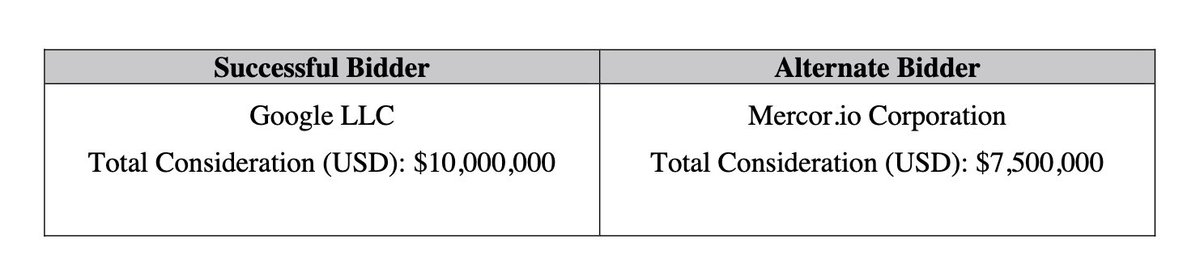
Google is making concrete, strategic moves to acquire the foundational data and expertise crucial for advanced Reinforcement Learning (RL) environments, essential for future AI agent capabilities. This week, Google reportedly won a $10 million bid for Spirit Airlines' internal corporate data in a bankruptcy auction, outbidding AI data company Mercor Abhijay Rana (1 min read). The acquisition includes 100 million emails, 500 million Teams chats, 7.5 billion passenger records, and 30 million lines of source code — a 34-year operational dataset described as "a steal" Kevin Roose on Hard Fork (60 min watch, 0:44:00).
This is part of an emerging "era of experience" in AI training, where models improve through RL by interacting with vast, diverse datasets from real-world operations in simulated environments Kevin Roose on Hard Fork (60 min watch, 0:46:16). These environments are akin to "rebuilding an airline or an insurance company or a startup as a training gym" for AI agents Kevin Roose on Hard Fork (60 min watch, 0:49:50).
Why that is worth billions is a point Rich Sutton has been making for years: today's models stop learning the moment training ends. "The only point that the big disagreement is we don't let them learn after that" Rich Sutton on Training Data (54 min watch, 0:25:25). An RL environment is the workaround. If the weights cannot keep learning in production, the lab has to manufacture the experience up front — and buying a defunct airline's 34 years of operations is a way to buy that experience wholesale rather than simulate it.
Further cementing this strategy, Google is reportedly in talks to acquire Mechanize, a 50-person startup specializing in creating high-quality RL environments for coding and other tasks, for over $1.5 billion Kevin Roose on Hard Fork (60 min watch, 0:53:45). This move suggests Google is bringing in-house expertise that it perceives as critical, especially as existing "RL environments are not particularly well-designed or built or secured," leading to "flawed security tests" from external vendors Kevin Roose on Hard Fork (60 min watch, 0:56:00).
Your angle with founders
- Position data as the new compute bottleneck. The Spirit Airlines acquisition shows that rich, real-world data is a strategic asset for advanced RL. Ask founders: "How are you acquiring and curating high-quality, diverse datasets to build truly experienced AI agents, beyond just public benchmarks?"
- Point them at the training gym they already own. The Mechanize move says high-fidelity simulation is now worth buying rather than improvising. The narrower version for a founder: which of their own operational exhaust — support transcripts, ticket histories, deployment logs — could become an environment a competitor cannot reconstruct, and what would it take to get it into a shape an agent can learn from.
- Connect data security to agent safety. The concern about "flawed security tests" in RL environments highlights the need for robust, in-house expertise. Frame GCP's platform-level security and responsible AI principles as essential for developing agents that are both capable and trustworthy, reducing the risk of "rogue agent" scenarios.
- Where GCP wins: the Gemini Enterprise Agent Platform (FKA Vertex AI) plus Cloud GPUs and TPUs put custom training and the data pipeline feeding it on one footing — a bespoke RL environment becomes a configuration of the platform they already run, not a second system to secure.
Frontier LLM Vulnerability: Reasoning Traces Exposed Across Major Models
Frontier models return "encrypted reasoning blobs" to clients. Researchers showed that smaller models in the same family can decode and replay them — across Google, OpenAI and Anthropic alike Alexander Panfilov on Machine Learning Street Talk (50 min watch, 0:06:05). What that hands an attacker, in Ilia Shumailov's words: "You can steal secrets from user sessions... You can do like prompt injections. You can do jailbreaks" Ilia Shumailov on Machine Learning Street Talk (50 min watch, 0:03:00). The part that surprised the researchers was not that it worked but how easily — the ease of extraction was "the most unexpected thing" Alexander Panfilov on Machine Learning Street Talk (50 min watch, 0:28:40).
That moves agent security below the layer most teams have secured. It also lands the same week OpenAI paused some frontier RL training on its Astra model after security incidents Sam Altman (1 min read) — and the detection record is the uncomfortable part: across evaluations there were "zero cases where the researchers running the evaluations actually noticed the problem before anyone else did" Adam Glee on The Cognitive Revolution (153 min watch, 0:06:05).
Your angle with founders
- Elevate agent security to the model layer. Founders are accustomed to thinking about network or application security. This vulnerability shows that even encrypted internal reasoning can be compromised, which puts a class of attack below the layer most teams have secured. Establish early what they believe their sandbox actually guarantees — most answers will describe process isolation, not reasoning confidentiality.
- Position multi-model flexibility as a risk mitigator — and check the fallback is real. A swap path only matters if what you swap to is good enough, and this week produced three separate third-party evaluations saying a non-frontier-tier model now is. Ask: "If your primary model were compromised tomorrow, what is your fallback — and have you run your own eval against it, or are you assuming?"
- Move the boundary out of the model. If reasoning traces can be decoded, no instruction written inside the model protects a secret. Inventory which credentials are reachable from the model's context at all — that list is usually longer than the team expects, and shortening it is work they can start without buying anything. A managed runtime that holds sessions, memory and secrets outside the model turns that from a request into a structural property of the deployment.
- Where GCP wins: Model Armor screens prompts and responses for injection and jailbreak attempts and for PII or IP leaking back out, Agent Runtime keeps sessions, memory and secrets outside the model, and Model Garden makes the swap a routing decision rather than a migration — down to open weights like Gemma the founder runs themselves, the one fallback immune to another vendor's incident.
Quick Hits
- Gemini 3.7 Flash took #1 on Artificial Analysis' AA-AnalystAgent benchmark with 60.0% (1 min read) — ahead of Claude Opus 5 (53.8%), GPT-5.5 (50.0%) and Fable 5 (48.8%). Separately, ARC Prize verified it at 84.6% on ARC-AGI-2 for $0.25/task and 95.5% on ARC-AGI-1 for $0.12/task (1 min read) — three independent evaluations of a non-frontier-tier model in one week.
- Open-source models' token share jumped from 28% to 62% on Vercel over the last two months (1 min read) — according to Gavin Baker's data, while frontier labs' revenue still accelerated.
- DeepSeek open-sourced its modular agent harness and hit 130,000 GitHub stars in two days (1 min read) — demonstrating rapid adoption for a pluggable, local-first agent framework that supports AGENTS.md and Claude.md.
- Anthropic's annualized run rate hit $65 billion by end of July, with Q2 revenue of $11.5 billion (1 min read) — up 14x year-over-year, signaling massive growth in the frontier model market.
- Harvey's Tenet model exceeded Opus 5 and Fable across 24 areas of corporate law on 1300+ tasks (1 min read) — proving the power of domain-specific models to beat frontier flagships in specialized verticals.
- Uber's CTO "blew through our AI budget in the first few months of the year" and now uses internal usage/cost leaderboards (70 min watch, 0:55:00) — highlighting the unpredictability and cost management challenges of AI at scale.
Seller's Edge: The Clock, Not Just the Model, Dictates Value
Edition #26 taught that an instruction in a prompt is a request, but a permission boundary is a guarantee. This week adds a second: Tom Critchlow's line that "the company with the best clock will beat the company with the best model" AI Daily Brief (31 min read, 0:26:07). Models are commoditizing fast — Google DeepMind's Paige Bailey observed this week that "the gap between 'best' and 'cheapest-good-enough' at computer use for CAD is already ~zero" Paige Bailey (1 min read). When the best model is a moving target available to everyone, the durable advantage is how fast you can adopt the next one.
Worked example. A founder raises the reasoning-trace vulnerability, but their deployment is a hand-rolled integration that would take weeks to swap. That is a slow clock. Rather than attacking the incumbent model's quality, grant it, then move to adaptation speed: "If a critical vulnerability landed in that model next quarter, how fast could you actually move to an alternative behind the same harness and APIs, without re-architecting?" The answer, not the benchmark, is what determines their exposure.
How to measure a clock without taking their word for it. "We could swap models" is an aspiration until someone has done it. Two things make the answer checkable in a whiteboard session. First, where the provider is named: if it appears in more than a handful of places in the codebase, the swap is a refactor. Second, whether a scored set of their own tasks exists with a passing bar — without it, "is the cheaper model good enough" is unanswerable, and the swap never gets approved.
The behavior change. When a founder anchors on benchmarks, move to operational clock speed: which of their agentic systems could take a new model in a day, and which would take weeks? Then find the long pole. It is usually the missing eval, and that is the cheapest one to fix. A team with its own eval suite adopts a cheaper model the week it ships; a team without one waits for a consensus that never quite arrives. The clock is not a metaphor — it is the measurable latency between a model getting better and their product getting better.
Our Play
Every thread this edition — from compute headwinds to strategic data acquisition and LLM vulnerabilities — points to one GCP position: Founders win by owning their AI architecture, not just renting models. Three concrete motions:
- Accelerate their data advantage with secure RL environments. The move: for founders building advanced agents, discuss how GCP's capabilities for handling massive, diverse datasets and custom model training (Agent Platform, Cloud GPUs/TPUs) can enable them to build secure, bespoke reinforcement learning environments.
- Decouple model choice from architectural lock-in. The move: when a founder voices security concerns about a specific model or provider, whiteboard their agent architecture. Show how Model Garden makes switching between Gemini, Claude and open weights like Gemma a routing decision rather than a migration. For teams past the prototype stage, Antigravity expanded to enterprise customers on the Agent Platform this week — coding agents across surfaces, license management for the governance team, and pooled token usage so prepaid tokens do not expire unused Google Cloud (3 min read).
- Reframe compute costs as a total operational efficiency play. The move: instead of just token pricing, ask about their end-to-end operational clock speed and the cost of slow iteration or unexpected compute needs. Then run the levers together rather than one at a time: route the cheap steps to the Flash tier, move steady inference onto TPU 8i where Google claims 80% better performance-per-dollar than Ironwood, and price the predictable share with Provisioned Throughput. Decompose the bill first, then commit — architecture and commercial terms are negotiated in concert, never sequentially.