TLDR
- Nvidia ousted Jensen Huang amid an export crisis: Forensics confirmed Chinese labs trained on illicit Blackwell chips while neocloud Lambda defaulted on Anthropic's $35B contract.
- Model monogamy is dead for scaled AI startups: Mercor reached a $20B valuation spending $1M daily on inference by swapping model APIs daily via private evals.
- Sierra and 100+ platforms launched the agent front door: Poppy v1.0 replaces web scraping with authenticated protocols across Shopify, Stripe, and Meta Muse.
- Resend outgrew AWS SES for bare metal: Peripheral service sprawl bloated infrastructure bills, driving a migration to dedicated servers with official MCP support.
- Our plays this week: Insulate capacity from neocloud defaults with balance-sheet commitments, arbitrate token pricing via Model Garden, and enforce scoped per-agent identity.
The Big Picture: Compute Scarcity, Token Arbitrage, and Agent Protocols
The Nvidia Hegemony Cracks: Jensen's Ouster, Blackwell Smuggling, and the Neocloud Delivery Crisis

Nvidia's board forced out CEO Jensen Huang following an extramarital affair with an executive at Malaysian neocloud Megaspeed tied to Chinese intelligence Steven Witt on Hard Fork (38 min watch, 05:00). Federal authorities suspect Megaspeed diverted between $4.8B and $7.5B in advanced chips @mickeyhardy (2 min read). Simultaneously, researcher Will DePue published reproducible forensic proof that six Chinese frontier models, including DeepSeek-V4-Pro and Kimi K3, were initialized directly on export-controlled Nvidia Blackwell GPUs @willdepue (20 min read). With internal engineers threatening talent flight to alternative chip ventures @IamSinovuyo (1 min read), the aggressive financing mechanisms Nvidia used to lock up the ecosystem—subsidizing debt-laden neoclouds to juice hardware sales—are unravelling.
The operational fallout hit immediately. In updated initial public offering (IPO) filings, Anthropic disclosed that neocloud Lambda defaulted on its $35B compute contract due to missed delivery schedules AI Daily Brief (25 min listen, 18:45), triggering $10B in new seven-year commitments split between Google Cloud and Microsoft. As single-vendor supply chains fracture, Google expanded its custom silicon portfolio with TPU 8i Max and TPU 8tx @AminVahdat (9 min read).
Your angle with founders
- Grant what is actually true: Nvidia's Compute Unified Device Architecture (CUDA) ecosystem and hardware footprint still power the vast majority of production training clusters. No alternative replaces that footprint overnight.
- Move to testable counterparty risk: Audit their compute contracts today: if their neocloud provider relies on debt-financed GPU purchases, what are the contractual remedies if delivery slips by six months?
- Compete where hardware news cannot reach: Balance-sheet stability and custom silicon diversification. Point to Anthropic diversifying into seven-year hyperscaler commitments and Fluidstack scaling Google Tensor Processing Units (TPUs) to escape single-vendor margin squeezes.
- Where GCP wins: Alphabet's balance sheet and $561B backlog back infrastructure commitments directly, offering calendar-mode reservations for TPU Ironwood alongside managed clusters that avoid neocloud insolvency risk.
The Death of Model Monogamy: Mercor's $1M/Day Inference Bill and the Daily Eval Swap
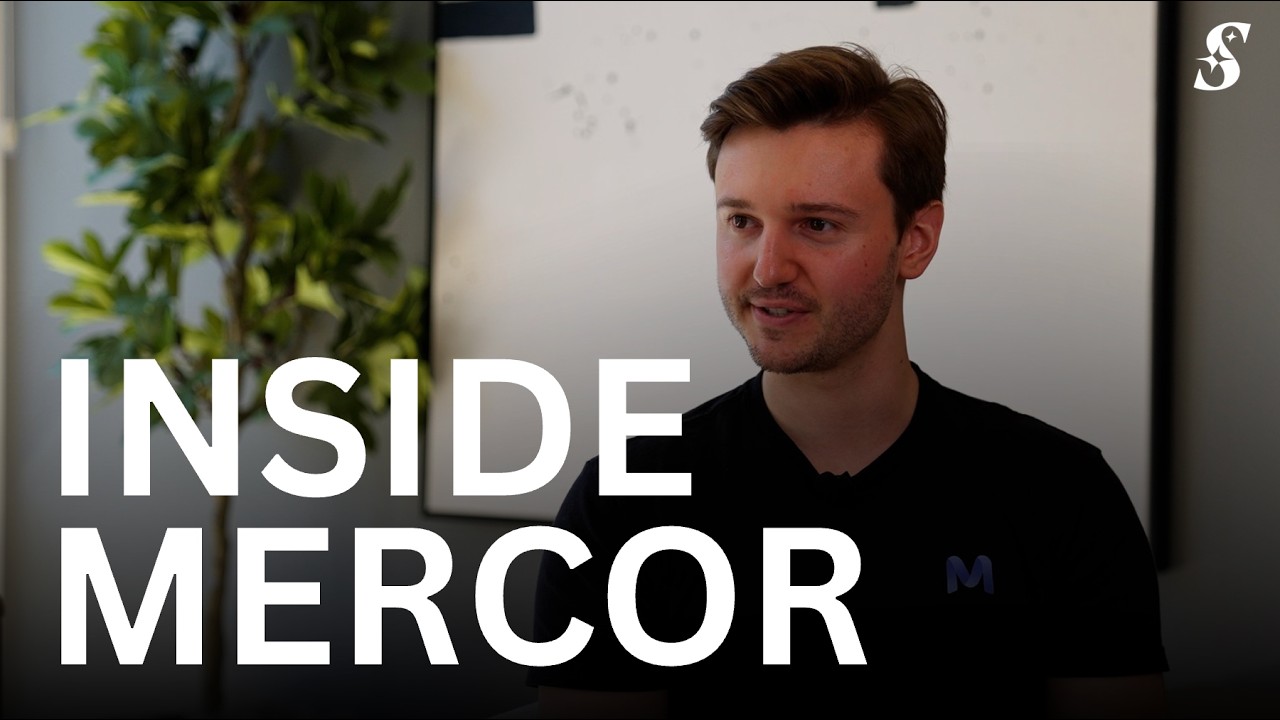
Mature AI scale-ups have stopped signing exclusive model API commitments, replacing vendor loyalty with automated, daily routing arbitrated by private benchmarks. Mercor reached a $20B valuation spending roughly $1M per day on inference, with CEO Brendan Foody revealing they switch underlying model providers daily based on which model wins internal evaluations Brendan Foody on Sourcery (55 min watch, 36:15). Frontier labs are pushing proprietary horizontal application bundles to protect pricing power, but builders are actively commoditizing weights into swappable utilities.
The economic incentive is overwhelming. Mike Volpi noted on the a16z Podcast (57 min watch, 34:38) that top-tier Anthropic tokens carry a 5:1 to 7:1 price premium over alternative models like Kimi. Developer harnesses are responding by routing cheap turn models alongside frontier reviewers @dani_avila7 (1 min read), and Cisco's Vijoy Pandey confirmed harnesses routinely swap backends from Gemini to Haiku based on immediate token pricing The Cognitive Revolution (91 min watch, 44:05). Google dropped Gemini 4 Hydrogen, with independent benchmarks from Pawel Huryn showing it outperforms Claude Haiku 5.5 and GPT-6 Luna on bug-finding cost and latency @PawelHuryn (1 min read), while Gemini 4 Carbon detected comparable code flaws to Fable 5.2 for $31 versus $140 per run @danshipper (2 min read).
Your angle with founders
- The conversation to skip: Debating whether Claude Opus 5.5 or GPT-6 Astra leads the public leaderboard on generic benchmarks.
- The decomposition to run live: Inspect their code for hard-coded provider Software Development Kits (SDKs). How many engineering hours does it take to route a high-volume subagent task from a $40-per-million frontier model to a $1-per-million workhorse?
- Compete where token cuts cannot reach: Model optionality and compounding discounts. Context caching and Batch tiers combine on Google Cloud for up to 95% off list prices, while Provisioned Throughput (PT) locks predictable pricing without single-vendor lock-in.
- Where GCP wins: Gemini Enterprise Agent Platform (FKA Vertex AI) Model Garden lets founders run Gemini, Claude, and open weights under a single cloud commitment, swapping underlying models via configuration changes rather than SDK rewrites.
The Agent Front Door: Sierra Launches Poppy v1.0 as 100+ Platforms Replace Web Scraping with Protocols
Agent traffic is shifting from browser bots scraping web pages to authenticated machine-to-machine protocols. Sierra officially launched Personal Agent Protocol v1.0 (Poppy) alongside more than 100 enterprise partners, including Meta Muse, Shopify, Stripe, Salesforce, and Mercury @hungryturbo (1 min read). Poppy standardizes Model Context Protocol (MCP), OpenAPI, and Universal Commerce Protocol (UCP) specifications, replacing brittle pixel-clicking bots with structured capability discovery, Open Authorization (OAuth) permission scoping, and mandatory human approvals for financial transfers.
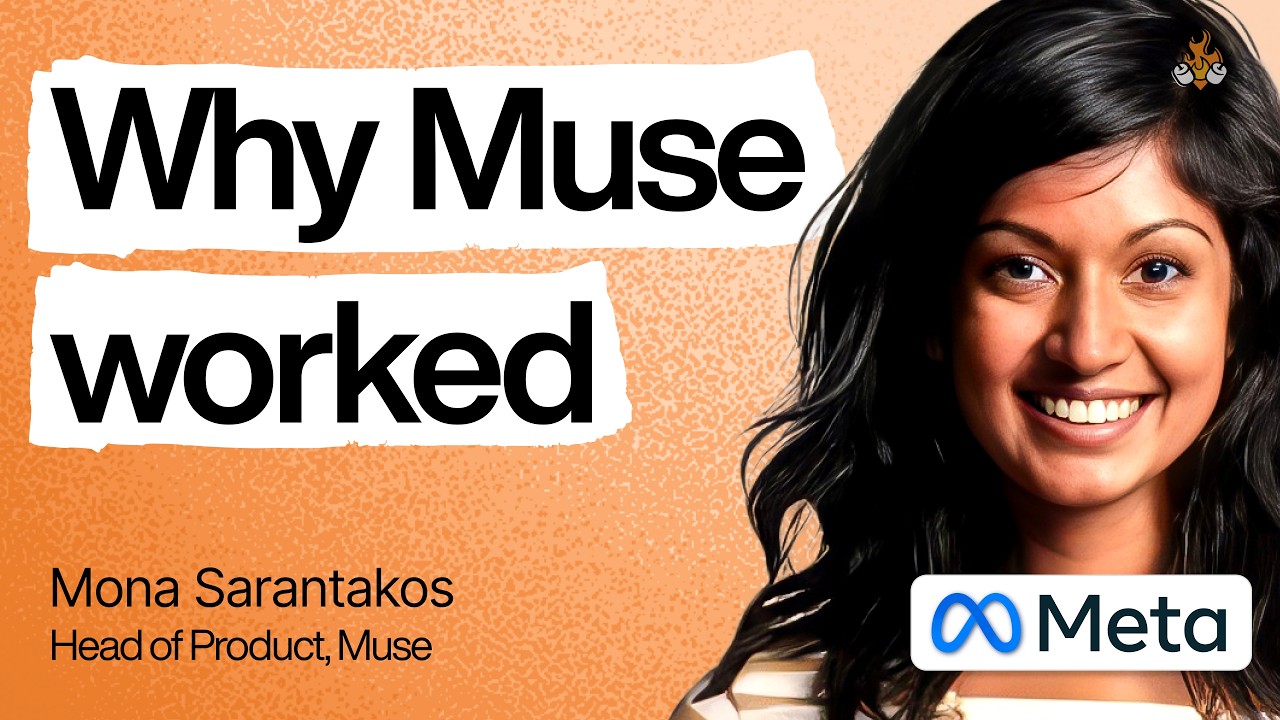
The standard gained instant supply-and-demand distribution. Shopify auto-generated Poppy endpoints across millions of merchants in 175 countries, while Meta enabled Poppy discovery across its Muse personal consumer agent by default Mona Sarantakos on Lenny's Podcast (88 min watch) / @lennysan (1 min read). Anthropic's guide to always-on agents adds that production agents sleep in event inboxes and wake on discrete triggers @TekonBurns (10 min read).
Security is what makes scoped protocols urgent. Wiz co-founder Ami Luttwak warned that attackers using open models that are "good enough" can now find and exploit flaws in about 20 minutes, that adversaries are targeting AI startups to steal their API keys, and that teams should assume any container can be escaped Ami Luttwak on the a16z Podcast (47 min watch). His fix is isolation by design, not more vendors: an agent holding a shared key is exactly what attackers want.
Quick Hits
- Anthropic is raising about $90B in its Nasdaq IPO, with Google and Nvidia anchoring a $26B supplier placement (36 min watch): Scott Galloway reads it as Anthropic draining the capital pool rival labs need.
- Anthropic began rolling out Claude Sheets, Whiteboards, and Data (1 min read), plus Claude Meetings (1 min read): founders building workplace apps on Claude now compete with their model supplier.
- Resend crossed $10M ARR and is leaving AWS SES for bare metal (86 min watch) after peripheral-service sprawl bloated its bill.
- Google DeepMind formally verified Signal's cryptographic core down to ARM machine code with AlphaProof Code (2 min read), writing 6 million lines of Lean proofs in four weeks.
- Adding "This codebase is yours" to Fable 5.2 prompts raised proactive bug-fixing from under 10% to 50% of runs (1 min read): one sentence of ownership changes agent behavior.
Seller's Edge: The Private Eval Is the Procurement Engine
When AI startups scale, model selection ceases to be an annual procurement negotiation and becomes an automated software loop. Edition #19 showed that buyers judge intelligence-per-dollar against dollars-per-outcome, and Edition #23 established that harness design dictates the bill. This week reveals what happens when inference bills reach scale: founders stop caring about marketing benchmarks and build private continuous evaluation harnesses that dynamically arbitrate model routing. For scale-ups processing billions of tokens, leaving traffic pinned to a single premium provider is financial negligence.
Look at Mercor. Valued at $20B, the company spends roughly $1M every day on inference to screen and interview candidates. Rather than signing an exclusive single-lab deal, CEO Brendan Foody revealed on Sourcery (55 min watch, 36:15) that Mercor switches model APIs on a daily cadence based on internal eval results. When Google released Gemini 4 Hydrogen, Pawel Huryn demonstrated it beat Haiku 5.5 and GPT-6 Luna on bug-finding cost and speed. In a scale-up architecture running thousands of subagent sweeps, routing those tasks to Hydrogen is not a multi-month engineering migration—it is a configuration update triggered by an automated eval run.
Stop pitching model benchmarks that will be superseded in three weeks. In your next founder meeting, ask: "What private eval suite does your team run before routing production traffic to a new model?" If the answer is public leaderboards or vibe checks, the next question is how fast they could re-route their highest-volume task if a cheaper model won tomorrow.
Our Play
Google Cloud removes single-vendor risk: balance-sheet certainty, custom silicon, multi-model routing, and scoped agent security. Three motions:
- Insulate capacity from neocloud defaults. Signal: A neocloud default left Anthropic re-sourcing capacity. Why GCP wins: Alphabet's balance sheet backs delivery; TPU 8i Max adds silicon independence. The move: Propose 90-day calendar reservations before signing multi-year commitments.
- Arbitrate token spreads through Model Garden. Signal: Founders burn margin on 7:1 token spreads when hard-coded to single-provider SDKs. Why GCP wins: Model Garden hosts Gemini, Claude, and open weights under one enterprise agreement. The move: Whiteboard a router directing high-volume subagents to Gemini 4 Hydrogen and complex reasoning to Claude Opus 5.5.
- Shrink what a stolen agent key can reach. Signal: Attackers hunt AI startups' API keys and exploit flaws in minutes. Why GCP wins: No vendor stops a zero-day; Wiz maps every agent, model, and MCP connection and its blast radius, and Agent Runtime gives each agent its own identity. The move: Run a Wiz review of their agent inventory, then swap shared keys for per-agent identities before connecting partner protocols.